
If you’re planning a commercial washroom project, you’ve probably come across terms like Compact Laminate and HPL (High Pressure Laminate). Many architects, contractors, interior designers, and building owners often ask:
“Is Compact Laminate the same as HPL?”
The short answer is:
Yes and no.
Compact Laminate is actually a type of High Pressure Laminate (HPL), but not every HPL board is Compact Laminate. Understanding this difference is important when selecting materials for toilet partition, lockers, laboratory worktops, and other high-moisture environments.
In this guide, D Cubicle will explain the differences, advantages, applications, and why Compact Laminate has become the preferred material for our commercial toilet partition project
What is HPL (High Pressure Laminate)?

High Pressure Laminate (HPL) is a decorative surface created by compressing multiple layers of kraft paper with decorative paper under high heat and pressure.
The finished laminate is then bonded onto a core material such as:
-
MDF
-
Particle Board
-
Plywood
This creates a decorative panel commonly used for:
-
Office furniture
-
Kitchen cabinets
-
Wardrobes
-
Wall panels
-
Reception counters
Although HPL offers an attractive finish, its overall durability depends on the core material underneath.
What is Compact Laminate?
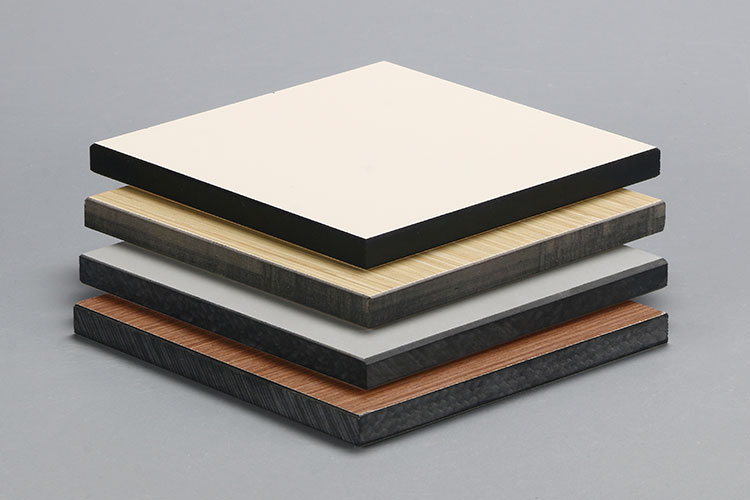
Compact Laminate is also manufactured using High Pressure Laminate technology.
However, unlike conventional HPL, Compact Laminate is made entirely from multiple layers of kraft paper compressed together under extremely high pressure.
Instead of being glued onto another board, the laminate itself becomes the structural board.
This creates a solid, dense, and highly durable panel that is suitable for demanding environments.
Because of its exceptional strength and water resistance, Compact Laminate is widely used for:
-
Toilet Cubicles
-
Toilet Partitions
-
Shower Cubicles
-
Laboratory Benches
-
Hospital Furniture
-
School Lockers
-
Commercial Lockers
Compact Laminate vs Standard HPL
| Feature | Compact Laminate | Standard HPL Board |
|---|---|---|
| Construction | Solid compact board | Decorative laminate bonded to substrate |
| Water Resistance | Excellent | Depends on substrate |
| Strength | Very High | Moderate |
| Impact Resistance | Excellent | Moderate |
| Suitable for Wet Areas | Yes | Limited |
| Lifespan | Long | Depends on usage |
| Common Application | Toilet Cubicles | Cabinets & Furniture |
Why Compact Laminate is Better for Toilet Partition in Malaysia?
Commercial washrooms experience constant exposure to:
-
Water
-
Humidity
-
Cleaning chemicals
-
Heavy daily traffic
Using the wrong material may result in swelling, peeling, warping, or premature damage.
Compact Laminate is specifically designed to perform well under these challenging conditions.
1. Excellent Water Resistance
Unlike many conventional boards, Compact Laminate is highly resistant to moisture.
This makes it ideal for wet environments such as toilets, changing rooms, and shower facilities.
2. Superior Strength
Compact Laminate is extremely dense and can withstand daily use in high-traffic commercial buildings.
This is one reason why it is commonly specified for airports, shopping malls, hospitals, universities, and office buildings.
3. Easy Maintenance
The smooth, non-porous surface makes cleaning simple while helping maintain a hygienic environment.
Routine cleaning is usually sufficient to keep the panels looking new for many years.
4. Long Service Life
Because the board is solid throughout, Compact Laminate offers excellent durability and long-term performance, reducing maintenance and replacement costs.
Can Standard HPL Be Used for Toilet Partition?
Technically, HPL bonded onto plywood or MDF can be used in certain dry interior applications.
However, for commercial toilet cubicles in Malaysia, it is generally not recommended due to the continuous exposure to moisture and heavy daily use.
Over time, moisture may penetrate the substrate if the panel is damaged or edges are exposed, affecting its durability.
For this reason, most architects and consultants specify Compact Laminate for commercial washroom projects.
Which One Should You Choose?
If your project involves:
-
Commercial buildings
-
Schools
-
Hospitals
-
Shopping malls
-
Factories
-
Airports
-
Government buildings
Compact Laminate is generally the preferred choice because of its durability, moisture resistance, and low maintenance requirements.
For dry interior furniture such as wardrobes, office desks, or cabinets, standard HPL panels may be a suitable option depending on the project requirements.
Conclusion
Although the terms Compact Laminate and HPL are often used interchangeably, they are not exactly the same.
Compact Laminate is manufactured using High Pressure Laminate technology but forms a solid structural panel, while standard HPL is typically a decorative surface bonded to another board.
For commercial toilet partition, Compact Laminate offers significant advantages in terms of durability, moisture resistance, hygiene, and long-term value.
Understanding this distinction helps architects, contractors, consultants, and building owners make more informed decisions when selecting the right toilet partition system for their projects.
Whether you’re planning a new commercial washroom or upgrading an existing facility, choosing the right material is an investment in long-term performance and reliability.